
Ion-OspA-59 Aptamer Details
ID# 8239
Structure
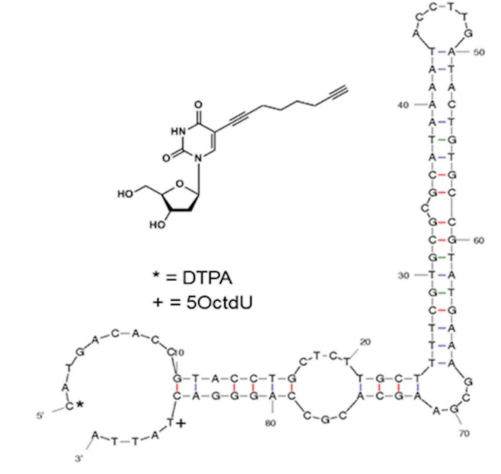
Chemistry
DNA
Target
Outer Surface Protein A (OspA)
Category
Protein
Affinity (Kd)
2.18 nM
Length
90
Aptazyme
No
Sequence (3-char table code)
G
A
C
U/T
5'-dTpdGpdCpdTpdTpdTpdTpdCpdGpdTpdGpdCpdGpdCpdGpdCpdApdTpdApdApdApdApdTpdApdCpdCpdTpdTpdGpdApdTpdApdCpdTpdGpdTpdGpdCpdCpdGpdTpdApdTpdGpdApdApdApdGpdCpdGp-3'
Molecular Weight:
Extinction Coefficient:
Binding Conditions / Buffer
The SERS substrate surface was incubated with 10uM thiolated aptamers in low salt buffer (LSB*) including 1mg/mL PEG2000 and 1mg/mL PEG2-Azide for 12 hours at 4°C at 100% humidity.
*LSB is composed of 48mM NaCl, 1mM KCl, 42 mM Na phosphate, and 5mM MgCl2 with a pH of 7.4. This was at 23°C.
Binding Temp: 4°C
Refolding Protocol
If the oligo is a known aptamer sequence: For binding studies, perform a refolding protocol to ensure proper function (i.e. binding to antigen or target). Refer to the aptamer reference source for the appropriate refolding parameters and binding conditions. Note: it is unknown whether aptamer functions properly without refolding.
Note: Information on this aptamer oligo was obtained from the literature and hasn't been validated by Aptagen.
Reference
Tabb, Joel S., et al. “An Antigen-Targeting Assay for Lyme Disease: Combining Aptamers and SERS to Detect the OSPA Protein.” Nanomedicine: Nanotechnology, Biology and Medicine, vol. 41, 2022, p. 102528., https://doi.org/10.1016/j.nano.2022.102528.
Request a Quote
Have your aptamer oligo synthesized by Aptagen.