
HAE N55 Aptamer Details
ID# 7942
Structure
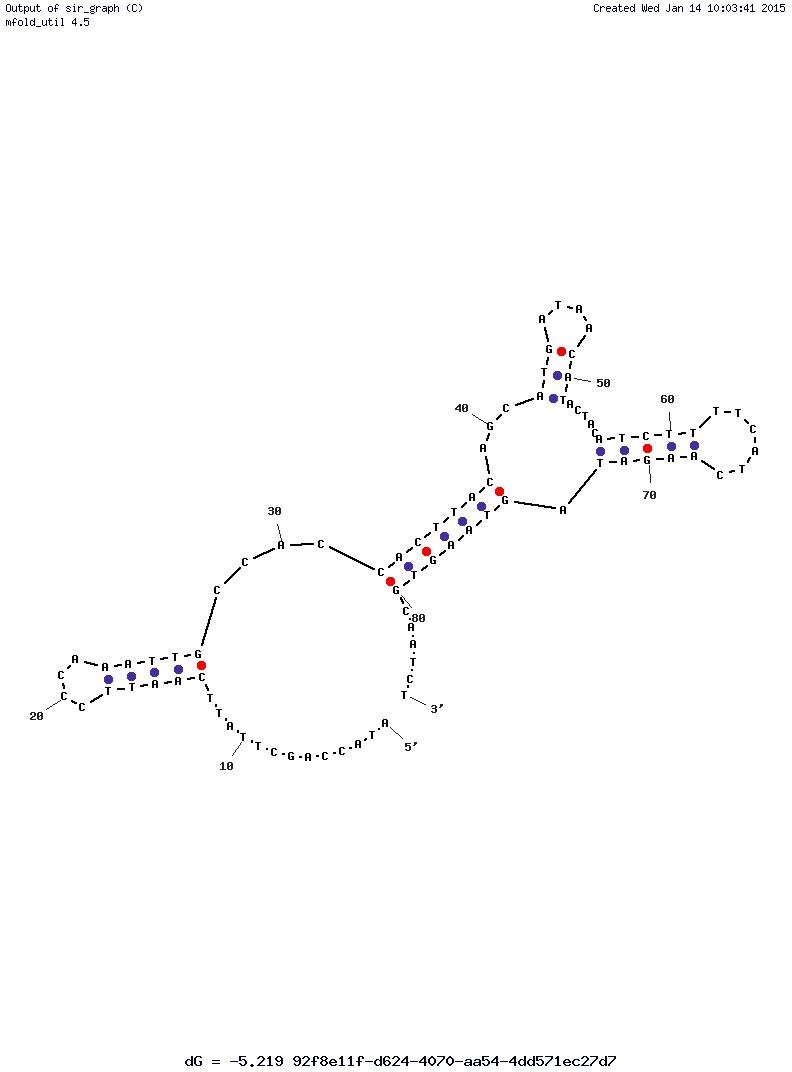
Chemistry
DNA
Target
Inflamed Human Aortic Endothelial Cells
Category
Cells
Affinity (Kd)
82 nM
Length
86
Aptazyme
No
Sequence (3-char table code)
G
A
C
U/T
dApdTpdApdCpdCpdApdGpdCpdTpdTpdApdTpdTpdCpdApdApdTpdTpdCpdCpdCpdApdApdApdTpdTpdGpdCpdCpdApdCpdCpdApdCpdTpdTpdApdCpdApdGpdCpdApdTpdGpdApdTpdApdApdCpdApdTpdApdCpdTpdApdCpdApdTpdCpdTpdTpdTpdTpdCpdApdTpdCpdApdApdGpdApdTpdApdGpdTpdApdApdGpdTpdGpdCpdApdApdTpdCpdTp
Molecular Weight: 26239.18
Extinction Coefficient: 837100
Binding Conditions / Buffer
Wash buffer: 5 mmol/L MgCl2, 4.5 g/L glucose, in Dulbecco PBS. Binding buffer: 0.1 % bovine serum albumin (BSA) 0.1 g/L yeast tRNA + Wash Buffer
Binding Temp: 24°C
Refolding Protocol
If the oligo is a known aptamer sequence: For binding studies, perform a refolding protocol to ensure proper function (i.e. binding to antigen or target). Refer to the aptamer reference source for the appropriate refolding parameters and binding conditions. Note: it is unknown whether aptamer functions properly without refolding.
Note: Information on this aptamer oligo was obtained from the literature and hasn't been validated by Aptagen.
Reference
Ji, Kaili., Lim, Wee Siang., Li, Sam Fong Yau., Bhakoo, Kishore. (2013) A two-step stimulus-response cell-SELEX method to generate a DNA aptamer to recognize inflamed human aortic endothelial cells as a potential in vivo molecular probe for atherosclerosis plaque detection. Anal Bioanal Chem (2013) 405:6853-6861. DOI 10.1007//s00216-013-7155-z
Request a Quote
Have your aptamer oligo synthesized by Aptagen.