
A15 Aptamer Details
ID# 8102
Structure
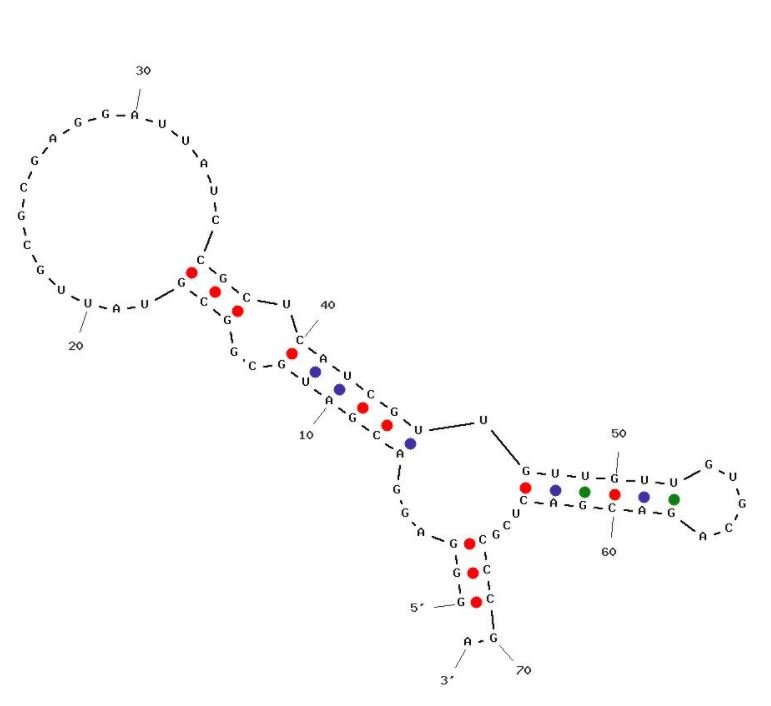
Chemistry
RNA
Target
Brain Endothelia Cell
Category
Cells
Affinity (Kd)
48.74 ± 3.11 nM
Length
71
Aptazyme
No
Sequence (3-char table code)
G
A
C
U/T
5’-rGprGprGprAprGprGprAprCprGprAprUprGprCprGprGprCprGprUprAprUprUprGprCprGprCprGprAprGprGprAprUprUprAprUprCprCprGprCprUprCprAprUprCprGprUprUprGprUprUprGprUprUprGprUprGprCprAprGprAprCprGprAprCprUprCprGprCprCprCprGprAp-3’
Molecular Weight: 21775.7
Extinction Coefficient: 650400
Binding Conditions / Buffer
10 mmol/l HEPES, pH 7.4, 50 mmol/l NaCl, 1 mmol/l MgCl2, 1 mmol/l CaCl2, 0.01% bovine serum albumin
Binding Temp: 37°C
Refolding Protocol
If the oligo is a known aptamer sequence: For binding studies, perform a refolding protocol to ensure proper function (i.e. binding to antigen or target). Refer to the aptamer reference source for the appropriate refolding parameters and binding conditions. Note: it is unknown whether aptamer functions properly without refolding.
Note: Information on this aptamer oligo was obtained from the literature and hasn't been validated by Aptagen.
Reference
Cheng C, Chen YH, Lennox KA, Behlke MA, Davidson BL. In vivo SELEX for Identification of Brain-penetrating Aptamers. Mol Ther Nucleic Acids. 2013;2(1):e67. Published 2013 Jan 8. doi:10.1038/mtna.2012.59
Request a Quote
Have your aptamer oligo synthesized by Aptagen.