
2-17-2 Aptamer Details
ID# 8236
Structure
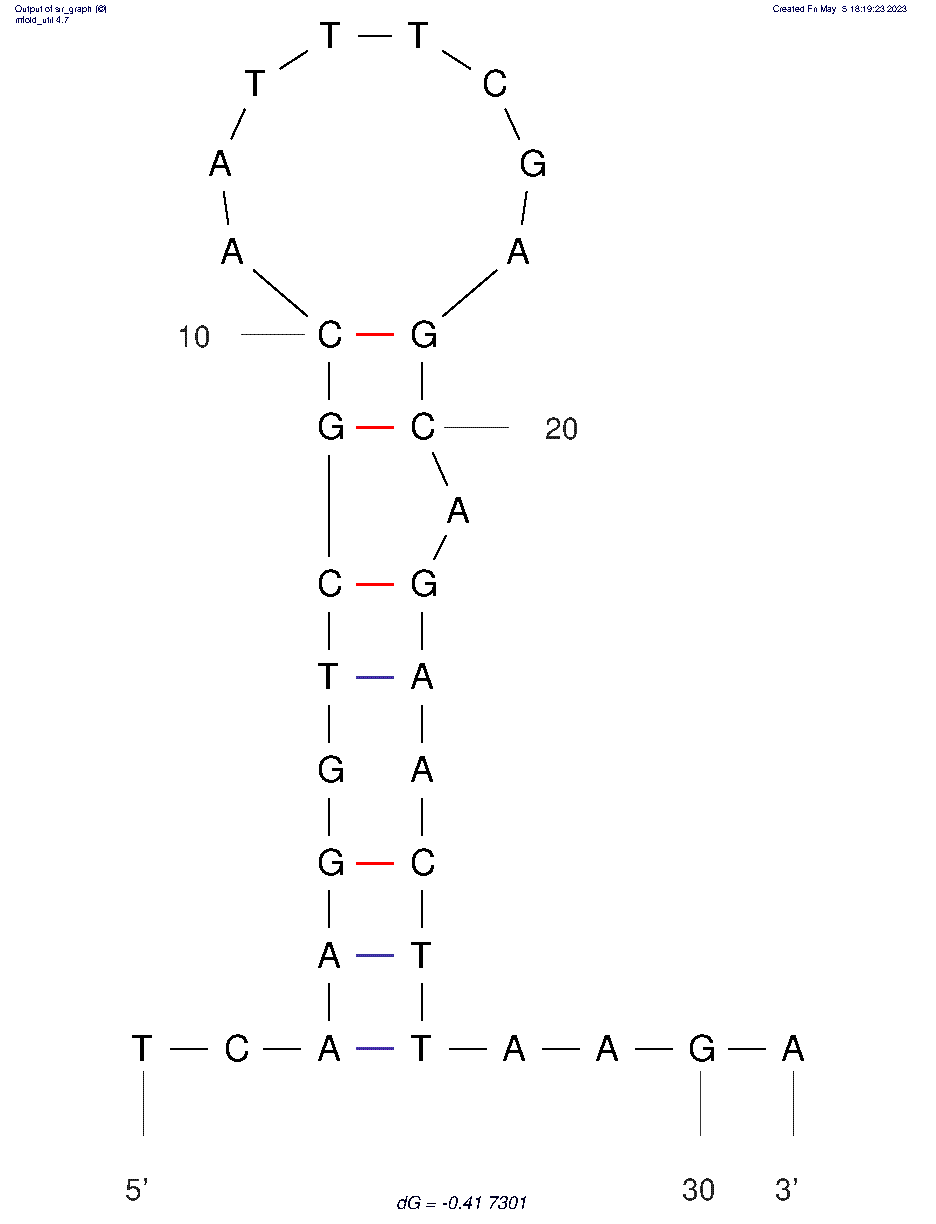
Chemistry
DNA
Target
E. coli
Category
Cells
Affinity (Kd)
101.76+/-9.11 nM
Length
31
Aptazyme
No
Sequence (3-char table code)
G
A
C
U/T
5'-dTpdCpdApdApdGpdGpdTpdCpdGpdCpdApdApdTpdTpdTpdCpdGpdApdGpdCpdApdGpdApdApdCpdTpdTpdApdApdGpdAp-3'
Molecular Weight:
Extinction Coefficient:
Binding Conditions / Buffer
This work incubated 10^5 CFU (colony forming units) and the library in 20 mm Tris HCl, 5 mM KCl, 100 mM NaCl, 1 mM CaCl2, 1 mM MgCl2, 0.02% Tween-20 for 1 hour at 37°C according to reference 21 (see below) of this entry's literature.
Kim, H. R.; Song, M. Y.; Kim, B. C. Rapid isolation of bacteria specific aptamers with a non-SELEX-based method. Anal. Biochem. 2020, 591, No. 113542.
https://www.ncbi.nlm.nih.gov/pmc/articles/PMC4841571/
Binding Temp: 37°C
Refolding Protocol
If the oligo is a known aptamer sequence: For binding studies, perform a refolding protocol to ensure proper function (i.e. binding to antigen or target). Refer to the aptamer reference source for the appropriate refolding parameters and binding conditions. Note: it is unknown whether aptamer functions properly without refolding.
Note: Information on this aptamer oligo was obtained from the literature and hasn't been validated by Aptagen.
Reference
Mengyue Liu, Lingjun Geng, Fengjuan Zhang, Shouyi Dou, Falan Li, Zhanli Liu, Yemin Guo, and Xia Sun
Journal of Agricultural and Food Chemistry 2022 70 (50), 15990-15998
DOI: 10.1021/acs.jafc.2c06167
https://pubs.acs.org/doi/abs/10.1021/acs.jafc.2c06167?ref=PDF
Request a Quote
Have your aptamer oligo synthesized by Aptagen.